
 English
 Español
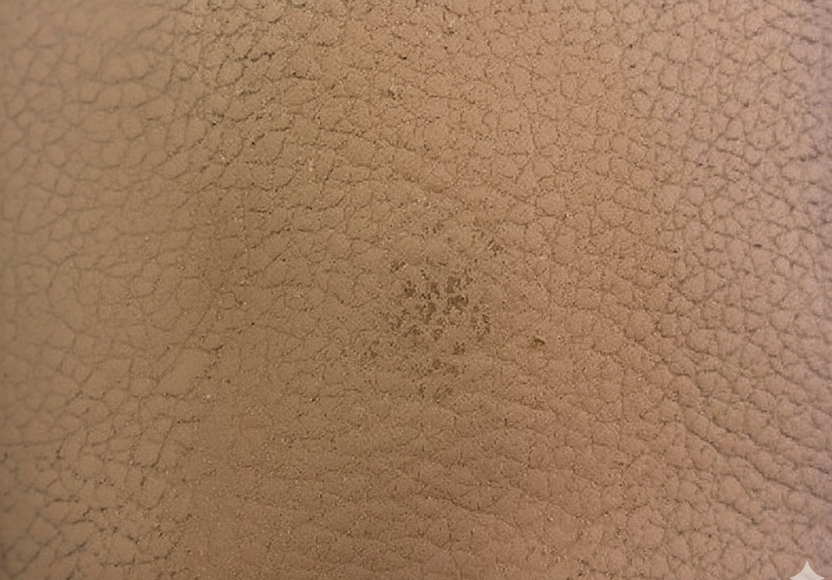
In case there’s any doubt: when we talk about denim transfer, we mean the indigo dye from jeans (especially new or dark denim) rubbing off onto the bag through friction, leaving a bluish haze or stains.
Quick diagnosis
- Recent transfer (hours/days): a superficial bluish veil with no texture. Usually improves greatly with gentle cleaning.
- Old transfer (weeks/months): a persistently tinted area or shadow. Requires a specific cleaner and patience; may not disappear completely.
- Leather type:
- Full-grain leather (smooth or pigmented): tolerates gentle damp cleaning with a specific product and rehydration.
- Suede/nubuck (velvety leathers): no water; work with eraser, brush, and a dedicated suede protector spray.
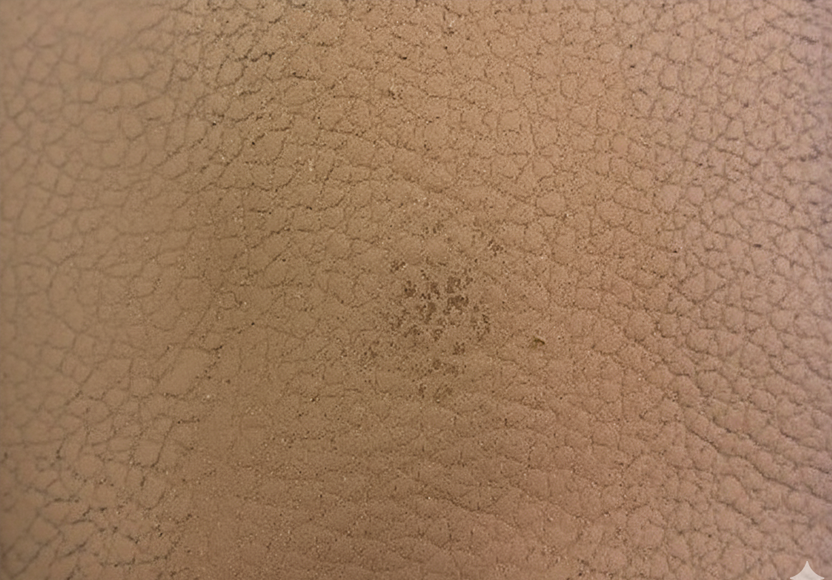
Cleaning protocol (full-grain leather) — from gentle to specific
Step 1 — Gentle cleaning with pH-neutral soap
When: recent stain or light haze.
- Dampen a soft cloth slightly in warm water + one drop of pH-neutral soap (without oils or glycerin). Create the foam in the cloth, not on the leather.
- Wipe with short, light strokes following the grain — do not scrub.
- Wipe again with another cloth slightly dampened in clean water.
- Let dry in the shade and assess the result.
- Avoid direct heat (no hairdryer or sunlight). Let the bag rest 24 hours before wearing it again.
Step 2 — “Color-safe” specific cleaner
When: if dye remains after Step 1.
- Always perform a patch test in a hidden area.
- Apply a small amount with a cloth using short, controlled movements.
- Remove according to the manufacturer’s instructions.
- Let rest 1–2 hours and reassess.
Step 3 — Focused repetition + rehydration
Goal: even out the finish so no matte patch remains.
- Repeat Step 2 only where dye is still visible.
- Apply a thin layer of neutral cream (pea-sized per panel).
- Buff gently with a dry cloth.
Realistic expectations: on very light or open-pore leathers (aniline), a faint shadow may remain. If the base color starts to lift or the surface becomes dull, stop and seek professional help.
Alternative — Suede/Nubuck (no water)
- Brush gently in one direction to lift the nap.
- Use a suede eraser with short strokes on the bluish area.
- Brush again to even out the texture.
- Apply a suede protector spray from 20–30 cm away in thin layers.
Avoid liquids and creams: they fix the dye and flatten the nap.
Aftercare
- Rest: let the bag sit for 12–24 hours in the shade after cleaning.
- Protection: for full-grain leather, apply a hydrophobic or stain-repellent spray suitable for leather after rehydrating; for suede, use a specific protector.
- Check-up: if friction with dark denim continues, reinforce protection every 2–3 months.
Prevention (what works best)
- Avoid continuous rubbing against new or dark jeans during the first wears.
- Use a “color-safe” protector spray before the first use (especially for light-colored leather). It protects against stains and water without altering tone or shine. Always confirm it’s suitable for light colors.
- Alternate your crossbody strap position to reduce friction on the same spot.
- For travel or events, use a light fabric cover or handle wrap when wearing dark denim.
- Wash new jeans 2–3 times before pairing them with light-colored bags, and avoid indigo + sulfur dye combinations (they bleed more easily).
Common mistakes (and how to fix them)
- Rubbing hard when dry → spreads the pigment. Solution: gentle cleaning (Step 1) with short strokes.
- Using alcohol or acetone → may discolor or lift the finish. Solution: “color-safe” cleaner + rehydration.
- Using multi-purpose wipes → leaves residues. Solution: avoid; follow the leather-type protocol.
- Applying water on suede → fixes the dye and mats the nap. Solution: eraser + brush + suede protector spray.
FAQs
Why do new jeans stain more?
Because they still release excess indigo pigment that hasn’t fully set after the first few washes.
How often should I reapply the protector?
Every 2–3 months if you use the bag daily or often wear dark denim.
Does the stain always come off on light leather?
Not always. In older cases, a faint shadow may remain. The goal is to improve and even out the finish.
Can I use wipes?
Better not: they leave residues and can cause halos. Start with pH-neutral cleaning (full-grain) or eraser/brush (suede).